Somebody called your team the Seachickens, and you came here to find out why. Fair.
Short version: somebody thought of it about ten minutes after Seattle got a football team, and nobody has come up with anything better since. The longer version is more interesting because the oldest evidence says it wasn’t a rival who started it. It was us.
Where We’re Headed
- 01The short answer
- 02Nobody can prove who said it first
- 03First time in print
- 04Twenty-six months to Denver
- 05It mostly keeps being us
- 06Eleven years ahead of anyone else
- 07Why this one stuck
- 08There’s no such bird
- 09It could’ve been worse
- 10It became a food
- 11Why it works either way
- 12Why this site is named this
- 13Full timeline
- 14Common questions
- 15Where this came from
The short answer
Take “Seahawks” and swap the second half for the least intimidating bird available. A hawk hunts. A chicken gets eaten. That’s the whole joke.
Nobody knows exactly when it started. The oldest example anyone can point to is from 1982, and it was already old by then. What we can say is that it took hold during the lean years of which, there were plenty. 2-12 in the first season, 4-12 in 1980, and a 1982 that fell apart before it got going. It has coasted ever since on pure inertia.
The part people get wrong is who said it. Everyone assumes a rival fan, which is a fair guess because rivals have kept it going ever since. It’s still wrong. The oldest surviving example in print is a Seattle man who wrote in to his own hometown paper about his own football team. He used it like a word everybody already knew.
Nobody can prove who said it first
People have tried. Twice, in fact, both times being on the same message board. Seahawks.NET put the question to its oldest members in January 2013 and again in January 2014. Both threads ran for pages. Neither produced an answer.
Which is strange because the newspapers had it there the whole time, but no one thought to look.
Seattle had two daily papers back then, the Times and the Post-Intelligencer. Both were printing the word in the 1980s. What neither of them ever printed was the story explaining where it started. The word was simply in the air, the way words are, and then it was in the paper, and nobody stopped to ask who said it first.
The closest thing to a first-hand account comes from a poster called Rainger, writing in 2013:
“Back in 1976 after training camp, a person who worked with me came back from the camp. He would go to the camps each year in Cheny but didn’t like the Hawks. He was calling them Seachickens even back then.”
Rainger · Seahawks.NET, 2013
That would put it at the franchise’s first training camp. One person’s memory, thirty-seven years after the fact, so hold it loosely.
Everyone else in those threads points somewhere different. One remembers first hearing it from an opposing fan inside the Kingdome. Several date it to the early 1980s, usually alongside “Squawks.” One blames Raiders fans. One blames Chris Berman, and a second poster corrects him: what Berman said on ESPN, he reckons, was “Seahacks.” Nobody produces a clip. Hold that one loosely, too.
And then there is Renohawk who claimed the whole thing:
“Sorry friends, I started it. Hey, when you’ve rooted since 76 and toughed out some hard years, I had to come up with something to throw off the bashers, so I bashed myself with Seachicken fan. My bad.”
Renohawk · Seahawks.NET, 2013
Take that for what it is worth. What it is worth is a forum post from 2013.
The first time it shows up in print
September 29, 1982. The team is 0-2. The players have been on strike for eight days and will stay out for fifty-seven. The head coach has just cut the team’s union representative a week before the opener, which the NFLPA will later win a labor case over. The Seattle Times that Wednesday ran a full page of reader letters under the headline “Reader: Time to remove Patera and Thompson.”
Seattle was not in a generous mood.
One of those letters was from a man named Gary Bradbury. He warms up with the old story about Babe Ruth being told he earned more than the President of the United States, and Ruth answering that he had had a better year than the President did. Funny when it was one man being cheeky, Bradbury figures. Less funny once it became the going rate. He would not enjoy today’s numbers. Then he gets going properly about what athletes are paid, and arrives here:
“As for the Seachickens — oops, Seahawks — let ’em strike. Why should management pay more money and fans support a study in ineptitude? If teams were paid on the basis of team success instead of individual success, many of these so-called athletes would be better off carrying brown bags and working at Boeing.”
Gary Bradbury, Seattle · The Seattle Times, September 29, 1982, page 36
Read the first clause again. “Seachickens — oops, Seahawks.”
That is a man making a joke he expects you to get instantly. You do not write “oops” unless the slip is already familiar. There is no setup, no gloss, no “as some people call them.” He says it, waves it off, and keeps going about Boeing.
So the nickname is older than this. September 29, 1982 is the earliest time anyone wrote it down on a page that survived. It is not the first time anyone said it, and the “oops” is the proof.
Two other things in that letter. He signs it from Seattle, and he ends by pointing out that the Huskies and Kirkland Little League were the ones putting the city back on the sports map that year, which was fair. Kirkland had won the Little League World Series a month earlier, beating a team from Taiwan and ending a run of five straight Taiwanese titles.
Patera and Thompson were both fired on October 13, two weeks after the letter ran. Bradbury got his wish, and the nickname outlived them both.
Twenty-six months later it belonged to Denver
November 21, 1984. Bob Finnigan of the Seattle Times filed from Denver ahead of that Sunday’s game, and found a city working itself up.
One station spent all day reminding Broncos fans how loud The Wave had been in the Kingdome the year before. Scream your vocal cords off, they said. They were calling it Noise Day. Fans were handing out orange leaflets for something called the Broncos Orange Stampede, the plan being that everybody stomps. The leaflet read: “The Wave is nothing compared to the sounds of the Orange Stampede. Trample the Wave.” The Denver Chamber of Commerce printed 75,000 orange cards to wave, and attached the whole thing to its Better Air campaign for reasons known only to the Denver Chamber of Commerce.
And then, in the middle of all that, one line from Finnigan:
“Another station between every record crowed references to the ‘Seattle Seachickens.’”
Bob Finnigan · The Seattle Times, November 21, 1984, page 25
Between every record. Not once as a bit, but on rotation, all day, on the radio, in another state.
It is also the earliest use by a rival we can document, and it lands twenty-six months after Gary Bradbury put it in a letter to his own hometown paper. Two years to travel from a Seattle grievance to a Denver morning show. It arrives in a slightly different shape, too. “Seattle Seachickens,” with the city attached, the way you say it about somebody else’s team.
It mostly keeps being us, though
November 30, 1987. It’s Monday night in the Kingdome. Bo Jackson runs for 221 yards on 18 carries, including a 91-yard touchdown he finishes by running straight up the tunnel and out of sight. It is his twenty-fifth birthday. The Raiders win 37-14.
The next morning the Seattle Times ran reader reactions under the headline “Hawk Talk.” Among them:
“As long as the Seachickens play ground Chuck against quality teams, they’ll continue to look like ground beef, 87 percent fat.”
Rolf Johannessen, Bellevue · The Seattle Times, December 1, 1987
Bellevue is across the lake from Seattle, so Johannessen is not some rival needling us from a safe distance. And “ground Chuck” is a swipe at Chuck Knox’s run-first offense, which means he follows this team closely enough to have opinions about playcalling. He calls them the Seachickens anyway.
September 16, 1990, a letter in the same paper simply opens: “How ’bout those Seachickens?”
Then 1996. Jim Meehan opened a season preview for the Spokesman-Review by reeling off the whole family: “Seahacks, Seachickens, Seabags, Seethroughs, Sealoogies.” He named the source in the next breath. “Cruel terms, no doubt, voiced by frustrated fans.”
Eleven years before anyone else printed it
Access World News indexes the full text of more than eleven thousand newspapers. Search the whole thing for “Seachickens,” sort oldest first, and you get 469 results going back to 1982.
The first nine are all Seattle papers.
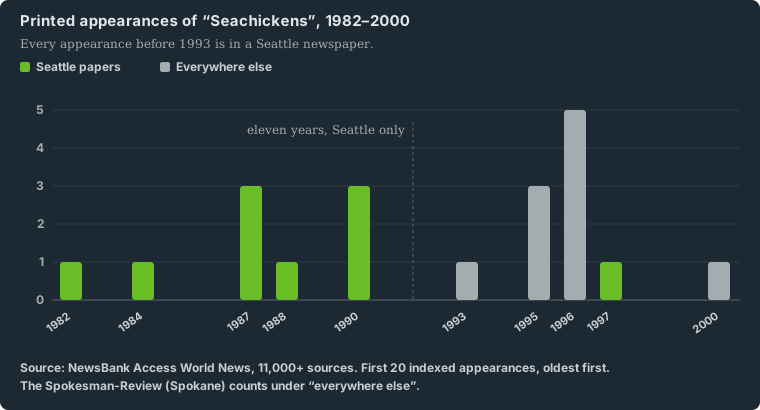
Bradbury in 1982. The Denver radio story in 1984, filed by a Seattle reporter for a Seattle paper. The Post-Intelligencer that October. Rolf Johannessen and one more that December. The P-I again in March 1988. Then three separate hits on a single day in September 1990. Eight years, nine appearances, one city.
The tenth is dated September 11, 1993, and it is a column by Randy Youngman in The Orange County Register.
So for eleven years, the word exists in print only in Seattle. Then, a California columnist picks it up, likes it, and uses it five more times over the next three years. The San Diego Union-Tribune follows in 1996. By 2000, it’s in a paper in Butte, Montana.
That’s not how an insult invented by rival fans behaves. Rival insults show up in rival cities. This one sat in Seattle for over a decade, being used by Seattle people about their own football team, and only then did anybody else pick it up.
We called ourselves the Seachickens first, during a strike, in a letter about Boeing. Everyone else was late.
That is the most Seattle possible origin for anything.
Why this one stuck when the better ones died
Back on Seahawks.NET, in the 2014 argument where nobody could establish where the word came from, one poster explained the mechanism without meaning to:
“The problem is you can put anything after Sea and make it an ‘insult.’ Doesn’t take a lot of creativity.”
He’s right, and it explains the volume. The bar is on the floor, so everybody clears it, so there were dozens of these. Seahacks. Seahags. Seabags. Seethroughs. Sealoogies. Seaslugs. Seasquawks. Yawnhawks. Weehawks. Seafrauds. Meehan opened his 1996 column by listing five of them. Then, in the last line of that same column, he reached for a sixth he had not bothered to mention: “The Seahawks, not to be confused with the Seapigeons this year.” That is how disposable these were.
The closest competitor was Seahacks, and you can watch it lose. Search both Seattle dailies and Seachickens comes back sixteen times against six for Seahacks. Seachickens runs from 1982 straight through to the present. Seahacks essentially stops.
They surfaced together, too. Seahacks turns up in the Post-Intelligencer on September 12, 1982, seventeen days before Bradbury’s letter, and the circumstances are worth a minute.
It’s on the editorial page and is written by Shelby Scates, who was not a sportswriter. Scates covered politics for the P-I for twenty-five years. He reported the Six-Day War. He wrote books about Warren Magnuson and about the fall of Joseph McCarthy.
The headline is “Seahawks battle nears crunch time.” In it, he calls the NFL “the National Football Monopoly (aka League).” He defends Sam McCullum at length. He compares Jack Patera to Rommel, unfavourably to Patera. And he ends somewhere a sports page would not have gone: players routinely play hurt, and some of them ease the pain with alcohol, amphetamines, or cocaine.
Partway down, in passing:
“The Seahacks are mired in misjudgments.”
Now, hold those two September documents next to each other. Scates is on the players’ side. Bradbury, seventeen days later, is not. Let ’em strike.
Opposite politics, same city, same month. And both of them reach for a mangled version of the team’s name without pausing to explain it.
Which tells you something. The nickname didn’t belong to one faction or the other. It was just what Seattle sounded like that September.
By 2006, Seahacks was already a memory. Stuart Eskenazi wrote a front-page piece the morning of the NFC Championship Game and put it in the past tense: “Cruelly, we used to call them the ‘Seahacks.’” Note the pronoun. Even the eulogy for the other nickname admits who did it.
All dead. Seachickens outlived every one of them because it’s the shortest to say, and it needs no explanation, which is also why it is the least funny. Insults that survive are rarely the good ones.
By 2015, the site 12th Man Rising was formally requesting retirement: “It’s important at this point to retire the term Seachickens. 35-years is long enough for a humorless name.” That went nowhere.
There is no such bird as a seahawk
_17,_Plate_81,_Fish_Hawk,_Male_(or_Osprey)_-_estampe_-_Drawn_from_Nature_and_Published_by_John_J._Audubon_;_Engraved,_Printed_%26_Coloured_by_R._Havell_Jun.r_-_btv1b53144039c.jpg)
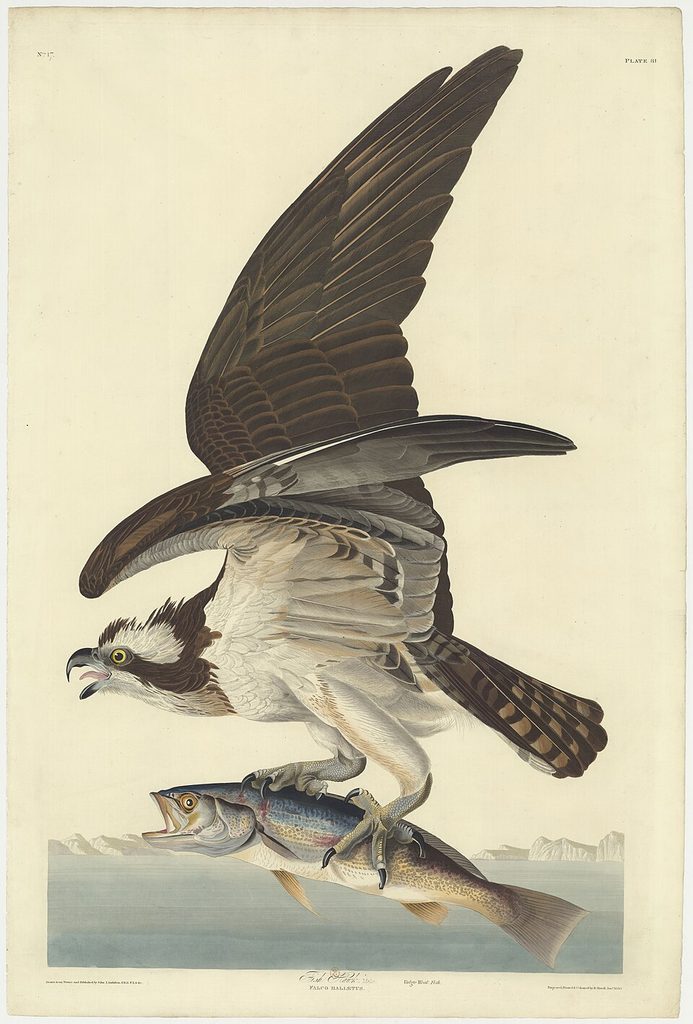
“Seahawk” is a folk name, mostly for the osprey, a raptor built almost entirely around catching fish. Audubon has written about this. So has Scientific American. The team is named after a nickname somebody once handed a different animal.
It goes further. The live bird that leads the team out at Lumen Field is named Taima, and the team’s own website lists the species as an augur hawk. Augur hawks are from Africa. Not an osprey, and not from here.
Chickens, meanwhile, are extremely real. You can walk outside and find one.
Which leaves the insult as the most zoologically accurate thing in the entire arrangement. Whether that counts in its favour, I couldn’t tell you.
Seattle came close to something much worse
The name came out of a public contest. The NFL awarded Seattle a franchise on December 5, 1974, and the club asked fans what to call it. The results were announced on June 17, 1975: 20,365 entries, 1,741 different names, and 153 people who wrote down “Seahawks.”
The team has published the rest of the list. Among the losing submissions:
- Roosters. Also White Roosters, and separately Roostertails
- Cockatoos, Woodpeckers, Rain Hawks, Sky Hawks
- Sea Urchins, Sardines, Shrimps, Flounders, Squids, Scampi
- Chowderheads, Ding Dongs, Sleazies, Soggies, Buffalo Chips
- Diarrheas
Somebody in 1975 wrote “Diarrheas” on an entry form and mailed it to an NFL franchise. Somebody else wrote “Roosters,” which this newsletter has thoughts about.
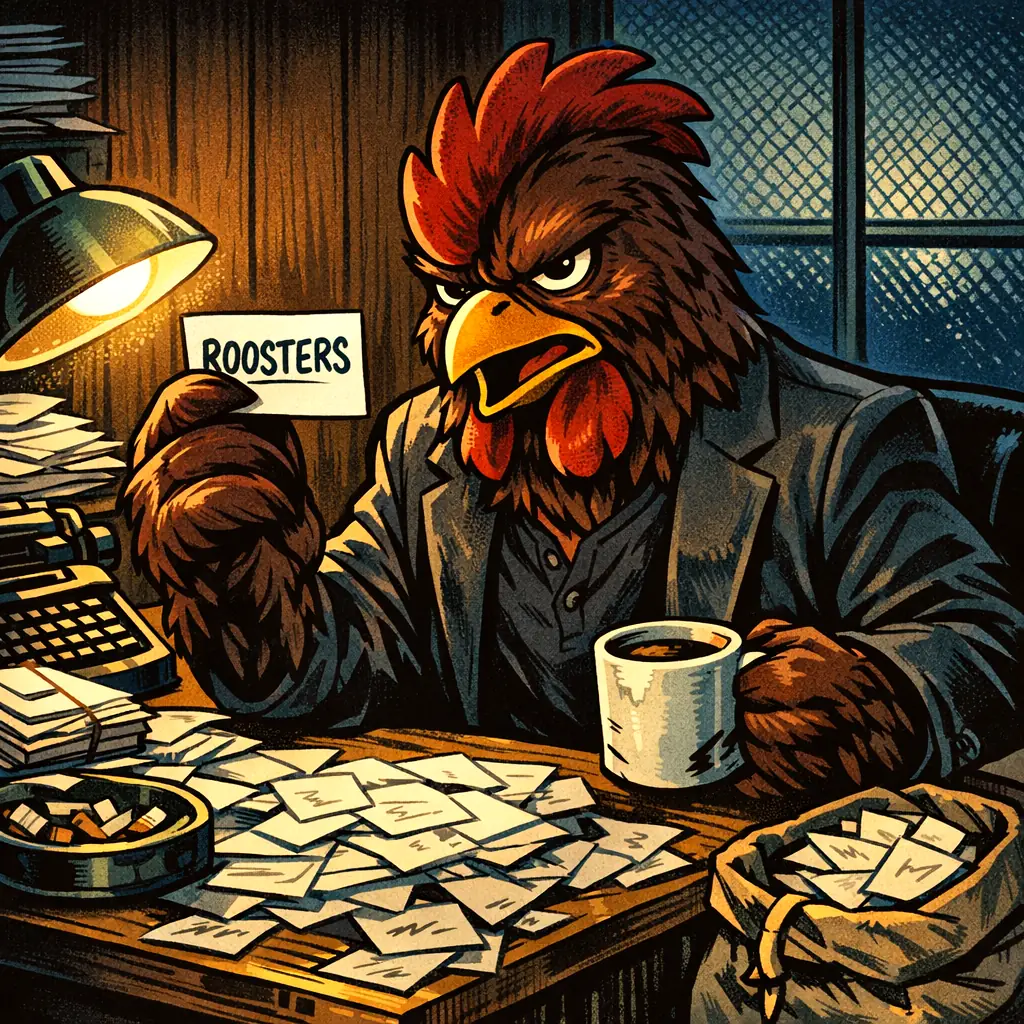
So the people calling us Seachickens are working with material Seattle volunteered first. We’ve always been like this.
At some point it stopped being a word and became a food
Nobody planned this. Three different fanbases, independently, decided the insult was a recipe.
A Seahawks fan on that same forum remembered his San Diego friends putting “Fry the Seachickens” on their banners at Chargers games. Urban Dictionary carries a 2019 entry for the “SeaChicken Nugget,” credited to “Oakland Raiders and San Francisco 49ers fans,” specifying a chicken nugget topped with sashimi-grade tuna. Somebody wrote out a full recipe. For a joke about a football team.
And then it made local television. Before the January 2019 wild card game at AT&T Stadium, CBS Texas interviewed Cowboys fans tailgating in the parking lot. From the segment:
“We call this Seattle sea chicken,” said Chris Greene, a Cowboys fan.
He was grilling it. On camera. At a playoff game.
The tuna keeps showing up because “sea chicken” was already taken. Chicken of the Sea has been selling canned tuna under a version of that phrase for decades. Which produced the best unanswered question in any of this research. A Seahawks fan, 2014:
“I’ve never understood the Seachickens slur. Is it implying that the Seahawks are in fact, tuna?”
Seahawks.NET, 2014
Nobody replied to him in 2014. Nobody has replied since.
Why it works whether the team is good or bad
Rivals treat Seachickens like a weapon, which misreads where it came from.
A fan writing to his own hometown paper during a strike. A political columnist on the editorial page. A man in Bellevue with strong opinions about playcalling. Seattle built this word to describe one specific feeling: loving a team that’s currently embarrassing you. Not an insult so much as a way of coping with one, and it belongs to us.
Which is why the standings don’t really touch it.
When the team is bad, the word is a shield. We said it first, we have been saying it since at least 1982, and nobody can wound you with a name you gave yourself. Gary Bradbury worked that out in a letter about Boeing and never got credit for it.
When the team is good, it’s a joke we get to keep telling on purpose. On February 8, 2026, Seattle beat New England 29-13 in Super Bowl LX. The game was played at Levi’s Stadium in Santa Clara. Figuring out whose building that normally is, is left to the reader. We are still the Seachickens. Nobody made us keep it.
They will be bad again at some point. This is football, and this city knows how that goes better than most. The name was built for both, which is exactly why it has outlasted every cleverer insult anyone threw at us.
The literal reading was always the weakest part anyway. As one guy put it in that same 2014 thread, ending an argument he probably didn’t know he was ending:
“A chicken is a damn fine animal in its own right.”
So why is this site called Seachickens?
Because an insult nobody can kill is an insult you may as well own.
We publish a daily Seahawks newsletter. Real news, sourced, with the jokes left in. Roster moves, camp battles, injuries, cap math, recaps, and cheerful contempt for the NFC West. It goes out every morning, and best of all, it’s free.
The name is the joke Seattle made about itself back when the team was bad, and the city was in a mood about it. Everyone else borrowed it later. We are just the first ones to put it on the masthead.
Timeline: how a taunt outlived everyone who coined it
Dec 5, 1974
Seattle gets a franchise
The NFL awards Seattle an expansion franchise.
Jun 17, 1975
“Seahawks” wins the naming contest
20,365 entries, 1,741 names, 153 people submit the winner. “Roosters” loses.
Sep 12, 1976
First regular-season game
At the Kingdome. The season ends 2-12.
1976
Earliest claimed sighting
A Seahawks.NET poster recalls a coworker returning from the first Cheney training camp already calling them SeaChickens. Recollection, not a record.
Early 1980s
Fans date the term to this stretch
Multiple fans independently date the term to this stretch, usually paired with “Squawks.” One recalls hearing it from an opposing fan in the Kingdome.
Sep 12, 1982
“The Seahacks are mired in misjudgments”
Shelby Scates, the P-I’s political columnist, writes it on the editorial page. Seventeen days before “Seachickens.”
Sep 21, 1982
NFL players strike
It lasts 57 days. Seattle is 0-2, and has just cut its union rep.
Sep 29, 1982
Earliest confirmed print use
Gary Bradbury of Seattle, in a Seattle Times letters page: “the Seachickens — oops, Seahawks.” The “oops” shows the joke was already old.
Oct 13, 1982
Patera and Thompson are fired
Two weeks after that letter ran.
Nov 21, 1984
Earliest documented rival use
Bob Finnigan reports from Denver that a radio station is crowing “Seattle Seachickens” between every record ahead of Sunday’s game.
Nov 25, 1984
Seattle wins in Denver
27-24.
Oct 26, 1987
First appearance in the Post-Intelligencer
Page 8.
Dec 1, 1987
“Hawk Talk” after Bo Jackson
Rolf Johannessen of Bellevue, in the Seattle Times “Hawk Talk,” the morning after Bo Jackson ran for 221 yards on Monday Night Football.
Sep 16, 1990
“How ’bout those Seachickens?”
A Seattle Times letter opens with that. Both dailies now carry it.
Sep 11, 1993
First printed use outside Seattle
Randy Youngman, The Orange County Register. Eleven years after Bradbury.
1995–1996
It spreads
Youngman uses it five more times and the San Diego Union-Tribune picks it up.
Aug 31, 1996
Meehan blames frustrated Seattle fans
Jim Meehan lists it in the Spokesman-Review and blames “frustrated fans” he grew up among in Seattle.
Feb 9, 2000
It reaches Butte, Montana
A paper in Butte prints it.
Nov 25, 2007
First Urban Dictionary entry
The joke is that the team has been to one Super Bowl and lost it.
Feb 8, 2008
A second Urban Dictionary entry
This one built entirely on Super Bowl XL and the officiating.
Jan 2013, Jan 2014
Seahawks.NET tries to establish the origin
Tries twice. Fails twice.
Dec 18, 2013
49ers fans crowdfund a Seattle billboard
Their pitch: “screw you seachickens.” The P-I covers it.
Apr 12, 2015
A public call to retire the term
12th Man Rising publicly calls for the term’s retirement. It is ignored.
Jan 5, 2019
The insult is now a menu item
CBS Texas films Cowboys fans grilling “Seattle sea chicken” outside AT&T Stadium before a wild card game.
Dec 29, 2019
Urban Dictionary supplies a recipe
An entry credits the term to “Oakland Raiders and San Francisco 49ers fans.”
Feb 8, 2026
Super Bowl LX
Seattle beats New England 29-13 at Levi’s Stadium in Santa Clara.
2026
The newsletter takes the name
A daily Seahawks newsletter publishes under the name Seachickens.
Common questions
Is “Seachickens” an official nickname?
No. The team goes by the Hawks, and the 12s are the fans. But “taunt” is not quite right either, because it depends entirely on who is holding it. From a Raiders fan it is an insult. When a man in Seattle wrote it in 1982 he was talking about his own team, and that is a different thing. Same word, two jobs.
Who invented it?
Unknown and probably unknowable. The earliest surviving print use is a reader letter in The Seattle Times on September 29, 1982, and even that one treats the word as already familiar. Fan recollections reach back to 1976. What is clear is that it was Seattle: across a database of eleven thousand newspapers, the word appears only in Seattle papers until 1993.
Is a seahawk a real bird?
No. It is a folk name for the osprey. There is no species called a seahawk.
Do Seahawks fans find it offensive?
Not really, and the history explains why. When a rival says it, the complaint on Seahawks.NET was never that it stung. It was that it took no effort to think up. When Seattle says it, it is not an insult at all. It is what you call a team you love that is currently embarrassing you. We put it on the masthead, which should answer the question.
Is it “Seachickens” or “Sea Chickens”?
Both are in circulation, and the sources are a mess about it. The 1996 Spokesman-Review wrote “Seachickens.” Urban Dictionary has entries under three different spellings. A Cowboys fan on CBS said “sea chicken,” singular. We use the solid form, because it’s our name now.
Are there other nicknames?
Plenty, all of them dead: Seahacks, Seahags, Seabags, Seethroughs, Sealoogies, Seaslugs, Seasquawks, Seapigeons, Yawnhawks, Weehawks, Seafrauds. Seahacks got closest. It appears six times across both Seattle dailies against sixteen for Seachickens, and by 2006 the Times was writing about it in the past tense.
Where all this came from
Most of this came out of newspaper archives rather than the internet, so here is exactly where in case you want to go and check. We would rather you did.
Archive records
Found through NewsBank’s Access World News, which is free with a Seattle Public Library card. There are no public links to these, so they are cited the old way.
- Gary Bradbury, letter to the editor. The Seattle Times, September 29, 1982, page 36
- Shelby Scates, “Seahawks battle nears crunch time.” Seattle Post-Intelligencer, September 12, 1982, page 17
- Bob Finnigan, “Denver fans ready; Garnett ‘questionable’.” The Seattle Times, November 21, 1984, page 25
- Rolf Johannessen, in “Hawk Talk.” The Seattle Times, December 1, 1987, page C7
- “Seahawks – too many organizers.” The Seattle Times, September 16, 1990, page C5
- Randy Youngman. The Orange County Register, September 11, 1993, page D2
- Stuart Eskenazi, “Super Bowl dreaming in the City of Self-Doubt.” The Seattle Times, January 22, 2006, page A1
- Scott Sunde, “49ers fans raise money for S.F.-bragging billboard in Seattle.” Seattle Post-Intelligencer, December 18, 2013
Everything else
- The A-Z on how the Seahawks got their name and Taima, both seahawks.com
- Jim Meehan, “No jokes, please, these Seahawks real thing”, The Spokesman-Review, 1996
- “What is a seahawk, anyway?”, Audubon, and “Are seahawks real?”, Scientific American
- Seahawks.NET, the threads that could not settle it: 2013 and 2014
- Urban Dictionary, entries from 2007, 2008 and 2019
- “Too many Seahawks hecklers are stuck in 1980”, 12th Man Rising, 2015
- “Cowboys, Seahawks fans bring own thunder while tailgating”, CBS Texas, 2019
- Seahawks at Broncos, November 25, 1984, Pro-Football-Reference